Hello class.
Your science project is due on Thursday! You need a 5 paragraph essay about your project. Remember, you need to make a DECORATION and a COSTUME from old materials that you either reuse or recycle.
Here's how to make a paper mache mask: http://www.ehow.com/how_2085169_make-paper-mache-mask.html.
Here's a video:
Here's a link to Halloween costume ideas: http://familyfun.go.com/halloween/halloween-kids-costumes/ and here is another one: http://familycrafts.about.com/cs/halloweentheme/a/091399.htm.
Finally, here are some websites with information about making haunted houses:
http://www.knowledgehound.com/topics/halloween_props.htm
http://party.kaboose.com/holidays/halloween/halloween-party.html#Decorations
http://tlc.howstuffworks.com/family/kids-halloween-party-ideas.htm
http://abcnews.go.com/GMA/Halloween/video/diy-haunted-house-disembodied-parts-11883192
Remember, YOU CANNOT BUY ANYTHING!!!!
Tuesday, October 26, 2010


Friday, October 22, 2010
Weekend Homework
Hi class!
Your homework this weekend is this:
1. Read an online workshop about writing poems, and then write a poem. This is due on Monday.
2. Do a social studies project about an explorer. This is due Tuesday.
All the information is on the blog!
Language Arts Homework: Write a Poem
Please go to this website: http://teacher.scholastic.com/writewit/poetry/karla_home.htm. It is called "Poetry Writing with Karla." Read the first page, and then press "Start." Read through all the pages until you get to "Publish Online." If you want to, you may publish your poem online, but you do not need to. I just want you to write a poem in your notebook. It is due on Monday.
Social Studies Project DUE TUESDAY!
Your social studies project is harder. You need to make a little book about an explorer. Your book needs to have:
1. A picture of the explorer
2. A map of where the explorer went
3. A timeline of the explorer's life
4. A page with 10 facts about the explorer. DO NOT COPY ANYTHING FROM THE INTERNET!
5. The flag that was on the explorer's ship. (For example, Christopher Columbus was Italian, but he sailed for Spain, so he had a Spanish flag on his ship.)
For extra credit: You can include a picture of the ship that the explorer used for extra credit.
Here are the names of your explorers:
Luisa: Vasco Nunez de Balboa
Antonia: Juan Ponce de Leon
Kent: Walter Raleigh
Juan Manuel: Jacques Marquette and Louis Joliet France
Juan Luis: : James Cook
Juan Felipe: Fernao Mendes Pinto
Martina: Francisco Pizarro
Nathalia: Vasco da Gama
Laura: Bartolomeu Diaz
Sofia: Marco Polo
Manuela M.: Ferdinand Magellan
Jorge: Abel Tasman
Mateo: Sir Francis Drake
Dani: Hernan Cortes
Manuela R: Amerigo Vespucci
Pablo: Henry Hudson
If you have any questions, just send me an email or leave a comment!
Your homework this weekend is this:
1. Read an online workshop about writing poems, and then write a poem. This is due on Monday.
2. Do a social studies project about an explorer. This is due Tuesday.
All the information is on the blog!
Language Arts Homework: Write a Poem
Please go to this website: http://teacher.scholastic.com/writewit/poetry/karla_home.htm. It is called "Poetry Writing with Karla." Read the first page, and then press "Start." Read through all the pages until you get to "Publish Online." If you want to, you may publish your poem online, but you do not need to. I just want you to write a poem in your notebook. It is due on Monday.
Social Studies Project DUE TUESDAY!
Your social studies project is harder. You need to make a little book about an explorer. Your book needs to have:
1. A picture of the explorer
2. A map of where the explorer went
3. A timeline of the explorer's life
4. A page with 10 facts about the explorer. DO NOT COPY ANYTHING FROM THE INTERNET!
5. The flag that was on the explorer's ship. (For example, Christopher Columbus was Italian, but he sailed for Spain, so he had a Spanish flag on his ship.)
For extra credit: You can include a picture of the ship that the explorer used for extra credit.
Here are the names of your explorers:
Luisa: Vasco Nunez de Balboa
Antonia: Juan Ponce de Leon
Kent: Walter Raleigh
Juan Manuel: Jacques Marquette and Louis Joliet France
Juan Luis: : James Cook
Juan Felipe: Fernao Mendes Pinto
Martina: Francisco Pizarro
Nathalia: Vasco da Gama
Laura: Bartolomeu Diaz
Sofia: Marco Polo
Manuela M.: Ferdinand Magellan
Jorge: Abel Tasman
Mateo: Sir Francis Drake
Dani: Hernan Cortes
Manuela R: Amerigo Vespucci
Pablo: Henry Hudson
If you have any questions, just send me an email or leave a comment!
Thursday, October 21, 2010
Answers to Science Test Review
The whole test is short answer, like this review.
1. What is the difference between kinetic and potential energy?
Kinetic energy is energy in motion, potential energy is possible energy.
2. What has more potential energy: a book on a shelf, or a book falling down?
A book on a shelf.
3. What is energy?
The ability to change matter.
4. If you throw a baseball, where does the ball's kinetic energy come from?
Your arm
5. What kind of energy do we get from the sun?
Solar Energy
6. What is mechanical energy?
The combination of both kinetic and potential energy
7. What is chemical energy?
The energy released during a chemical reaction
8. Where do we get electrical energy?
From moving electrons inside atoms.
9. What is the difference between light from the sun and heat from a light bulb?
Light from the sun is solar energy, but light from a light bulb is electrical energy turned into light.
10. In our experiment, why did the butter melt?
Because the heat from the water was transferred to the knife.
11. What is an conductor?
An object that transfers energy, especially heat or electrical energy
12. What is a better insulator, a person or a textbook?
A textbook
13. What is the difference between convection and conduction?
Convection is heat transferred through air or liquid, conduction is heat transferred directly through objects.
14. What is a fossil fuel? A nonrenewable resource like oil, coal, or natural gas, that comes from ancient animals and plants that were buried for millions of years. The stored solar energy inside the plants and animals turned into fuel.
15. What is a renewable resource? A resource we can replace in a human lifetime, like plants, animals, solar energy, wind energy, and water energy.
16. What is a nonrenewable resource? A resource we cannot replace in a human lifetime.
17. What is conservation?
Protecting and saving natural resources, and using as little as possible of what we need.
18. How can people use renewable resources like wind, water, and solar energy?
We can use wind to power windmills that make electricity, we can use falling water to make energy, and we can collect solar energy to use as electricity.
1. What is the difference between kinetic and potential energy?
Kinetic energy is energy in motion, potential energy is possible energy.
2. What has more potential energy: a book on a shelf, or a book falling down?
A book on a shelf.
3. What is energy?
The ability to change matter.
4. If you throw a baseball, where does the ball's kinetic energy come from?
Your arm
5. What kind of energy do we get from the sun?
Solar Energy
6. What is mechanical energy?
The combination of both kinetic and potential energy
7. What is chemical energy?
The energy released during a chemical reaction
8. Where do we get electrical energy?
From moving electrons inside atoms.
9. What is the difference between light from the sun and heat from a light bulb?
Light from the sun is solar energy, but light from a light bulb is electrical energy turned into light.
10. In our experiment, why did the butter melt?
Because the heat from the water was transferred to the knife.
11. What is an conductor?
An object that transfers energy, especially heat or electrical energy
12. What is a better insulator, a person or a textbook?
A textbook
13. What is the difference between convection and conduction?
Convection is heat transferred through air or liquid, conduction is heat transferred directly through objects.
14. What is a fossil fuel? A nonrenewable resource like oil, coal, or natural gas, that comes from ancient animals and plants that were buried for millions of years. The stored solar energy inside the plants and animals turned into fuel.
15. What is a renewable resource? A resource we can replace in a human lifetime, like plants, animals, solar energy, wind energy, and water energy.
16. What is a nonrenewable resource? A resource we cannot replace in a human lifetime.
17. What is conservation?
Protecting and saving natural resources, and using as little as possible of what we need.
18. How can people use renewable resources like wind, water, and solar energy?
We can use wind to power windmills that make electricity, we can use falling water to make energy, and we can collect solar energy to use as electricity.
Science Test Review
1. What is the difference between kinetic and potential energy?
2. What has more potential energy: a book on a shelf, or a book falling down?
3. What is energy?
4. If you throw a baseball, where does the ball's kinetic energy come from?
5. What kind of energy do we get from the sun?
6. What is mechanical energy?
7. What is chemical energy?
8. Where do we get electrical energy?
9. What is the difference between light from the sun and heat from a lightbulb?
10. In our experiment, why did the butter melt?
11. What is an conductor?
12. What is a better insulator, a person or a textbook?
13. What is the difference between convection and conduction?
14. What is a fossil fuel?
15. What is a renewable resource?
16. What is a nonrenewable resource?
17. What is conservation?
18. How can people use nonrenewable resources like wind, water, and solar energy?
Answers posted at 7:00 p.m.
2. What has more potential energy: a book on a shelf, or a book falling down?
3. What is energy?
4. If you throw a baseball, where does the ball's kinetic energy come from?
5. What kind of energy do we get from the sun?
6. What is mechanical energy?
7. What is chemical energy?
8. Where do we get electrical energy?
9. What is the difference between light from the sun and heat from a lightbulb?
10. In our experiment, why did the butter melt?
11. What is an conductor?
12. What is a better insulator, a person or a textbook?
13. What is the difference between convection and conduction?
14. What is a fossil fuel?
15. What is a renewable resource?
16. What is a nonrenewable resource?
17. What is conservation?
18. How can people use nonrenewable resources like wind, water, and solar energy?
Answers posted at 7:00 p.m.
Monday, October 18, 2010
Social Studies Review Answers
You need to be able to answer these questions:
Over civilizations...
1. What is a civilization?
A civilization is a number of communities working together in a common society to try to improve their lives.
2. What does a civilization need?
A common language, shared economy, shared currency, common government and laws, progress, and AGRICULTURE
3. What evidence to we have of the Cro Magnon people?
paintings in caves in France
4. What were the first four ancient civilizations we know about?
Mesopotamia (the Sumerians), Egyptians, Indus River Valley, and Yellow River Valley
5. What was the same about all of the first four civilizations?
They were built near rivers.
Questions about Mesopotamia...
1. What was the civilization in Mesopotamia called?
Sumer
2. What are some things the people in Mesopotamia invented?
the wheel, writing, time, multiplication tables
3. What rivers ran through Mesopotamia?
the Tigris River and the Euphrates River
Questions about Egypt
1. What river ran through Egypt?
the Nile River
2. Who ruled Egypt?
pharaohs
3. How did Egyptians write?
in hieroglyphics
Questions about the Indus River Valley
1. What country is the Indus River in now?
India
2. What did the Indus River Valley civilization invent?
Zero (0)
3. The Indus River Valley had more of one thing than any other civilization. What was it? cities
Questions about the Yellow River Valley
1. What country is the Yellow River in now?
China
2. How did people in the Yellow River Valley write?
in characters
3. Who ruled the Yellow River Valley?
emperors of family dynasties
The Seven Wonders of the Ancient World
1. What is the only original seven wonder of the world that still exists?
The Great Pyramid of Giza
2. Why weren't any of the original seven wonders of the world in China or South America?
Because the author didn't know about those places.
Ancient Greece
1. Where was ancient Greece?
In present day Greece, and along the coast of the Mediterranean
2. What kind of government did Greece have?
Democracy
3. What are some types of art that Greece had?
architecture, sculpture, music, writing, theater
4. What special sporting event did Greece have?
The Olympics
5. What was the most important city in Greece?
Athens
Ancient Rome
1. What kind of government did Rome have?
Republic
2. Where was the Roman Empire?
It was based in Italy, but it spread throughout Europe and the Mediterranean coast
3. Why did the Roman Empire end?
It was too big and it fell apart because the Romans couldn't control everything
4. What is one famous thing the Romans built?
Aqueducts, fountains, the Coliseum, the Pantheon, the Roman Forum
5. What was the most important city in Rome?
Rome!
The Middle Ages
1. What was the most important part of life in the Middle Ages?
Religion
2. What kind of government did countries have in the Middle Ages?
Monarchies
3. What kind of economy did people have in the Middle Ages?
Feudalism
4. What killed almost half the people in Europe during the Middle Ages?
The Black Death (Bubonic Plague)
Religion
1. What is monotheism?
A religion with only 1 god
2. What is polytheism?
A religion with more than 1 god
3. What did the religions of Egypt, Mesopotamia, Greece, and Rome share? (What was the same?)
They were polytheistic (Except for Egypt, which was monotheistic for a little while)
4. Which two religions in the Middle Ages were monotheistic?
Islam and Christianity
5. Why were the gods in Egypt kind, but the gods of Mesopotamia were mean?
Because in Egypt the Nile flooded at the same time every year, and the Egyptians could plan their lives around the flooding. In Mesopotamia, the rivers would flood at strange times and only some years, so they couldn't predict when the rivers would flood. Their farms could be ruined and they might not have food, so they thought the gods were punishing them.
Over civilizations...
1. What is a civilization?
A civilization is a number of communities working together in a common society to try to improve their lives.
2. What does a civilization need?
A common language, shared economy, shared currency, common government and laws, progress, and AGRICULTURE
3. What evidence to we have of the Cro Magnon people?
paintings in caves in France
4. What were the first four ancient civilizations we know about?
Mesopotamia (the Sumerians), Egyptians, Indus River Valley, and Yellow River Valley
5. What was the same about all of the first four civilizations?
They were built near rivers.
Questions about Mesopotamia...
1. What was the civilization in Mesopotamia called?
Sumer
2. What are some things the people in Mesopotamia invented?
the wheel, writing, time, multiplication tables
3. What rivers ran through Mesopotamia?
the Tigris River and the Euphrates River
Questions about Egypt
1. What river ran through Egypt?
the Nile River
2. Who ruled Egypt?
pharaohs
3. How did Egyptians write?
in hieroglyphics
Questions about the Indus River Valley
1. What country is the Indus River in now?
India
2. What did the Indus River Valley civilization invent?
Zero (0)
3. The Indus River Valley had more of one thing than any other civilization. What was it? cities
Questions about the Yellow River Valley
1. What country is the Yellow River in now?
China
2. How did people in the Yellow River Valley write?
in characters
3. Who ruled the Yellow River Valley?
emperors of family dynasties
The Seven Wonders of the Ancient World
1. What is the only original seven wonder of the world that still exists?
The Great Pyramid of Giza
2. Why weren't any of the original seven wonders of the world in China or South America?
Because the author didn't know about those places.
Ancient Greece
1. Where was ancient Greece?
In present day Greece, and along the coast of the Mediterranean
2. What kind of government did Greece have?
Democracy
3. What are some types of art that Greece had?
architecture, sculpture, music, writing, theater
4. What special sporting event did Greece have?
The Olympics
5. What was the most important city in Greece?
Athens
Ancient Rome
1. What kind of government did Rome have?
Republic
2. Where was the Roman Empire?
It was based in Italy, but it spread throughout Europe and the Mediterranean coast
3. Why did the Roman Empire end?
It was too big and it fell apart because the Romans couldn't control everything
4. What is one famous thing the Romans built?
Aqueducts, fountains, the Coliseum, the Pantheon, the Roman Forum
5. What was the most important city in Rome?
Rome!
The Middle Ages
1. What was the most important part of life in the Middle Ages?
Religion
2. What kind of government did countries have in the Middle Ages?
Monarchies
3. What kind of economy did people have in the Middle Ages?
Feudalism
4. What killed almost half the people in Europe during the Middle Ages?
The Black Death (Bubonic Plague)
Religion
1. What is monotheism?
A religion with only 1 god
2. What is polytheism?
A religion with more than 1 god
3. What did the religions of Egypt, Mesopotamia, Greece, and Rome share? (What was the same?)
They were polytheistic (Except for Egypt, which was monotheistic for a little while)
4. Which two religions in the Middle Ages were monotheistic?
Islam and Christianity
5. Why were the gods in Egypt kind, but the gods of Mesopotamia were mean?
Because in Egypt the Nile flooded at the same time every year, and the Egyptians could plan their lives around the flooding. In Mesopotamia, the rivers would flood at strange times and only some years, so they couldn't predict when the rivers would flood. Their farms could be ruined and they might not have food, so they thought the gods were punishing them.
Sunday, October 17, 2010
Social Studies Quiz Review
You need to be able to answer these questions:
Over civilizations...
1. What is a civilization?
2. What does a civilization need?
3. What evidence to we have of the Cro Magnon people?
4. What were the first four ancient civilizations we know about?
5. What was the same about all of the first four civilizations?
Questions about Mesopotamia...
1. What was the civilization in Mesopotamia called?
2. What are some things the people in Mesopotamia invented?
3. What rivers ran through Mesopotamia?
Questions about Egypt
1. What river ran through Egypt?
2. Who ruled Egypt?
3. How did Egyptians write?
Questions about the Indus River Valley
1. What country is the Indus River in now?
2. What did the Indus River Valley civilization invent?
3. The Indus River Valley had more of one thing than any other civilization. What was it?
Questions about the Yellow River Valley
1. What country is the Yellow River in now?
2. How did people in the Yellow River Valley write?
3. Who ruled the Yellow River Valley?
The Seven Wonders of the Ancient World
1. What is the only original seven wonder of the world that still exists?
2. Why weren't any of the original seven wonders of the world in China or South America?
Ancient Greece
1. Where was ancient Greece?
2. What kind of government did Greece have?
3. What are some types of art that Greece had?
4. What special sporting event did Greece have?
5. What was the most important city in Greece?
Ancient Rome
1. What kind of government did Rome have?
2. Where was the Roman Empire?
3. Why did the Roman Empire end?
4. What is one famous thing the Romans built?
5. What was the most important city in Rome?
The Middle Ages
1. What was the most important part of life in the Middle Ages?
2. What kind of government did countries have in the Middle Ages?
3. What kind of economy did people have in the Middle Ages?
4. What killed almost half the people in Europe during the Middle Ages?
Religion
1. What is monotheism?
2. What is polytheism?
3. What did the religions of Egypt, Mesopotamia, Greece, and Rome share? (What was the same?)
4. Which two religions in the Middle Ages were monotheistic?
5. Why were the gods in Egypt kind, but the gods of Mesopotamia were mean?
You need to be able to label the First Four Civilizations on a map. See if you can do it here:

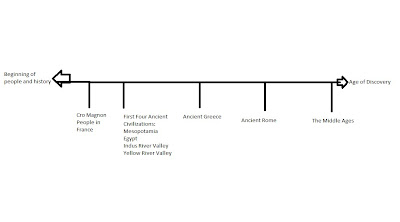
You need to make a timeline of the historical periods we have learned about.
That's all. Good luck!
Over civilizations...
1. What is a civilization?
2. What does a civilization need?
3. What evidence to we have of the Cro Magnon people?
4. What were the first four ancient civilizations we know about?
5. What was the same about all of the first four civilizations?
Questions about Mesopotamia...
1. What was the civilization in Mesopotamia called?
2. What are some things the people in Mesopotamia invented?
3. What rivers ran through Mesopotamia?
Questions about Egypt
1. What river ran through Egypt?
2. Who ruled Egypt?
3. How did Egyptians write?
Questions about the Indus River Valley
1. What country is the Indus River in now?
2. What did the Indus River Valley civilization invent?
3. The Indus River Valley had more of one thing than any other civilization. What was it?
Questions about the Yellow River Valley
1. What country is the Yellow River in now?
2. How did people in the Yellow River Valley write?
3. Who ruled the Yellow River Valley?
The Seven Wonders of the Ancient World
1. What is the only original seven wonder of the world that still exists?
2. Why weren't any of the original seven wonders of the world in China or South America?
Ancient Greece
1. Where was ancient Greece?
2. What kind of government did Greece have?
3. What are some types of art that Greece had?
4. What special sporting event did Greece have?
5. What was the most important city in Greece?
Ancient Rome
1. What kind of government did Rome have?
2. Where was the Roman Empire?
3. Why did the Roman Empire end?
4. What is one famous thing the Romans built?
5. What was the most important city in Rome?
The Middle Ages
1. What was the most important part of life in the Middle Ages?
2. What kind of government did countries have in the Middle Ages?
3. What kind of economy did people have in the Middle Ages?
4. What killed almost half the people in Europe during the Middle Ages?
Religion
1. What is monotheism?
2. What is polytheism?
3. What did the religions of Egypt, Mesopotamia, Greece, and Rome share? (What was the same?)
4. Which two religions in the Middle Ages were monotheistic?
5. Why were the gods in Egypt kind, but the gods of Mesopotamia were mean?
You need to be able to label the First Four Civilizations on a map. See if you can do it here:

You need to make a timeline of the historical periods we have learned about.

That's all. Good luck!
Thursday, October 14, 2010
Math Test
Tomorrow you have a math quiz. The topics are:
Multiples
Factors
Greatest Common Multiple
Greatest Common Factor
Prime Numbers
Composite Numbers
Divisibility Rules
Exponents
Writing Exponent Numbers in word form
Prime Factorization
Square Root
You should study by doing the Chapter 11 Test Review in your book.
Subscribe to:
Posts (Atom)